

Anal health is integral health. Take care of yourself without taboos.
Anal health is integral health. Take care of yourself without taboos.
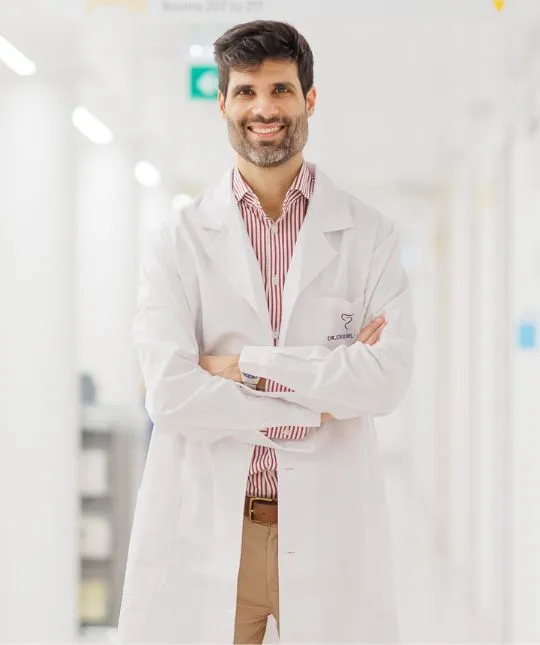
I am a colorectal surgeon based in Porto, Portugal, with a special focus on proctology and minimally invasive treatments for anorectal conditions.
My clinical practice is dedicated to the accurate diagnosis and treatment of conditions such as hemorrhoids, anal fissures, anal fistulas and pilonidal disease, using modern techniques that aim to reduce discomfort and promote faster recovery.
I provide personalized care for both Portuguese and international patients, ensuring a professional, discreet and patient-centered approach.
I treat a wide range of colorectal and anal conditions, including hemorrhoidal disease, fissures, fistulas and pilonidal cysts.
Whenever possible, treatment is approached conservatively or through minimally invasive techniques, always tailored to the specific characteristics of each patient.
In selected cases, surgical intervention may be necessary, using advanced approaches designed to minimize tissue damage and improve recovery time.
Diode laser technology uses a focused beam of energy to treat hemorrhoids in a precise and minimally invasive way.
During the procedure, laser energy is applied directly to the hemorrhoidal vessels, promoting their shrinkage and reducing symptoms, with minimal impact on surrounding tissues.
HAL-RAR is an advanced technique that combines Doppler-guided hemorrhoidal artery ligation with recto-anal repair.
By reducing blood flow to the hemorrhoidal arteries, it leads to a decrease in hemorrhoid size and, in more advanced cases, allows correction of the local anatomy.
Radiofrequency uses high-frequency energy to induce controlled coagulation of hemorrhoidal tissue, preserving surrounding structures.
This technique is minimally invasive and promotes faster healing, with reduced postoperative discomfort.
After a detailed clinical evaluation, including symptom assessment and local examination, the most appropriate technique is selected for each individual case.
Minimally invasive approaches have significantly improved the treatment of proctological conditions.
These techniques are designed to reduce trauma to the tissues and allow a smoother recovery process.
Key benefits include:
Each case should be carefully evaluated to determine the most suitable approach.
Chronic Anal Fissure
Botulinum toxin may be used in patients with chronic anal fissure to reduce internal anal sphincter hypertonia and relieve spasm. By lowering resting pressure, it helps reduce pain and support healing.
It’s an excellent non-surgical option for chronic anal fissures, especially when we want to avoid the risk of incontinence associated with sphincter-cutting surgery.
Pain During Anal Sex
In selected patients, pain during receptive anal intercourse (anodyspareunia) may be associated with sphincter hypertonia or fissure-related pain. In these situations, botulinum toxin may be considered to relax the sphincter, reduce spasm and improve comfort. A careful specialist assessment is essential, as this is not a universal treatment for anorectal pain.
Postoperative Pain Control After Hemorrhoid Surgery
Botulinum toxin may also be considered in selected cases as an adjunct to reduce pain after hemorrhoid surgery. By decreasing internal sphincter spasm in the early postoperative period, it may help improve comfort and support recovery.
A specialist evaluation is essential to determine the most appropriate treatment for each patient.

Cuide da sua saúde anal! Sintomas como dor, sangramento ou desconforto não devem ser ignorados. Procure um especialista em proctologia para diagnóstico e tratamento adequados. O acompanhamento médico pode melhorar a sua qualidade de vida e prevenir complicações futuras. Marque a sua consulta!